
You just noticed a stain on your leather sofa. You are not sure what to do. Should you use water? A cleaning spray? A dry cloth?
Most people make the wrong move in that moment. And that wrong move causes more damage than the stain itself.
Leather furniture is a real investment. It looks great and feels great. But it also needs the right kind of care. Clean it wrong and it starts to crack, fade, or peel. Clean it right and it lasts for decades.
This guide will walk you through everything. You will learn how to clean leather furniture properly, remove tough stains, condition the surface, and protect it long term. Whether you have a large leather couch in your living room or a custom-made sofa in the corner, these tips apply to you.
Let us get started.
Why Cleaning Leather Furniture the Right Way Matters
Leather is a natural material. It breathes like skin. It absorbs moisture and oils over time. It also dries out without regular care.
When you clean leather furniture properly, you do two things. You remove dirt, oils, and stains from the surface. And you keep the leather soft and healthy so it does not crack.
Skipping regular leather sofa cleaning leads to a buildup of grime in the grain. Over time, that grime breaks down the surface. The leather starts looking dull, rough, and old much faster than it should.
A good cleaning routine does not take much time. But it makes a huge difference in how your furniture looks and how long it lasts.
Step One: Know Your Leather Type Before You Do Anything
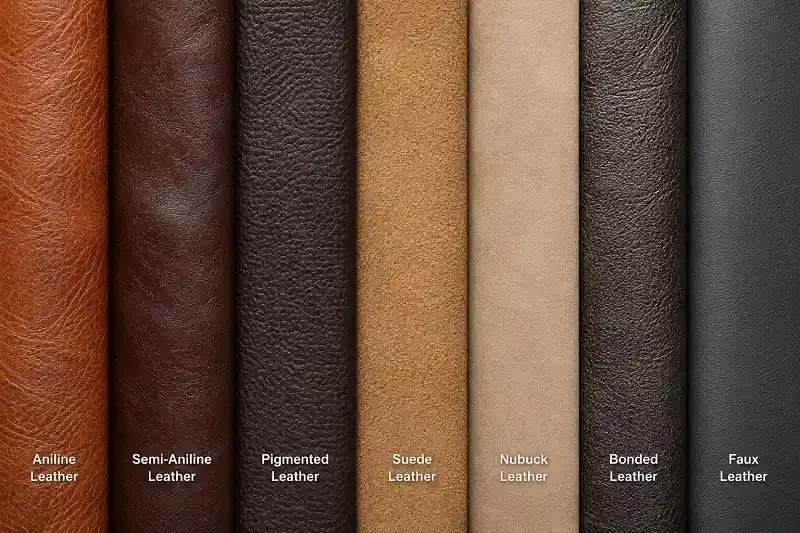
This is the most important step. Different types of leather need different cleaning methods. Using the wrong product on the wrong type can cause permanent damage.
Here is a simple breakdown.
Aniline Leather
Aniline leather is the softest and most natural type. The dye soaks all the way through the hide. You can see the natural grain clearly. It feels luxurious but it is very sensitive. Water and oils absorb into it quickly. Always use products made specifically for aniline leather.
Semi-Aniline Leather
This type has a thin protective coating over the dye. It is slightly more durable than pure aniline. It still needs gentle care but handles mild soap and water better.
Pigmented Leather
Pigmented leather has a polymer coating on the surface. It is the most durable and stain-resistant type. Most family sofas are made from pigmented leather. It handles everyday life well. You can clean it with mild soap and water without much worry.
Nubuck and Suede Leather
Both of these have a soft, velvety texture. They are very delicate. Never use water or liquid cleaners on them. Use a dry nubuck brush and products made specifically for these surfaces.
Bonded and Bicast Leather
These are made from lower-grade materials and tend to peel over time. Clean them gently. Avoid any harsh products that could strip the surface coating.
Faux or Vegan Leather
Faux leather is made from synthetic materials like polyurethane. It is not porous. Spills sit on the surface instead of soaking in. Mild soap and warm water work well. Do not use conditioners made for real leather on this type.
How to Identify Your Leather Type
Check the care tag on your furniture. It is usually found under the cushions or on the back of the piece. Look for these codes.
W means water-based cleaners are safe. S means use dry-cleaning solvents only. SW means both are safe. X means vacuum only. No liquids at all.
If there is no tag, contact the manufacturer or test any product on a hidden area first.
What You Need to Clean Leather Furniture at Home
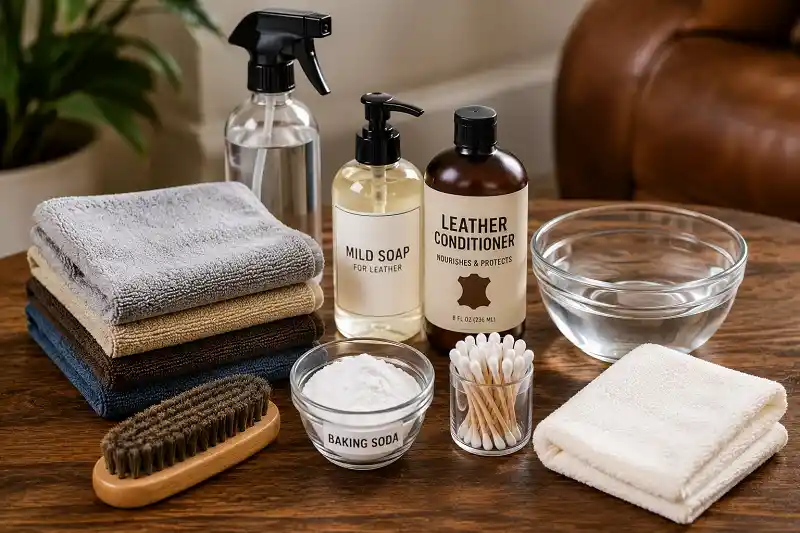
You do not need expensive products. Most of what you need is already at home.
For routine cleaning, gather a few soft microfiber cloths, a bowl of lukewarm water, a small amount of mild liquid soap or castile soap, and a good leather conditioner.
For stain removal, you may also need rubbing alcohol, white vinegar, baking soda, cornstarch, and cotton swabs.
Avoid paper towels. They are too rough. Avoid abrasive sponges. They scratch the surface. Avoid all-purpose household sprays. Most contain chemicals that damage leather.
How to Clean Leather Furniture Properly: Step by Step
This method works for most pigmented and semi-aniline leather sofas. Always test on a hidden area before applying anything to the full surface.
Step 1: Vacuum the Entire Surface
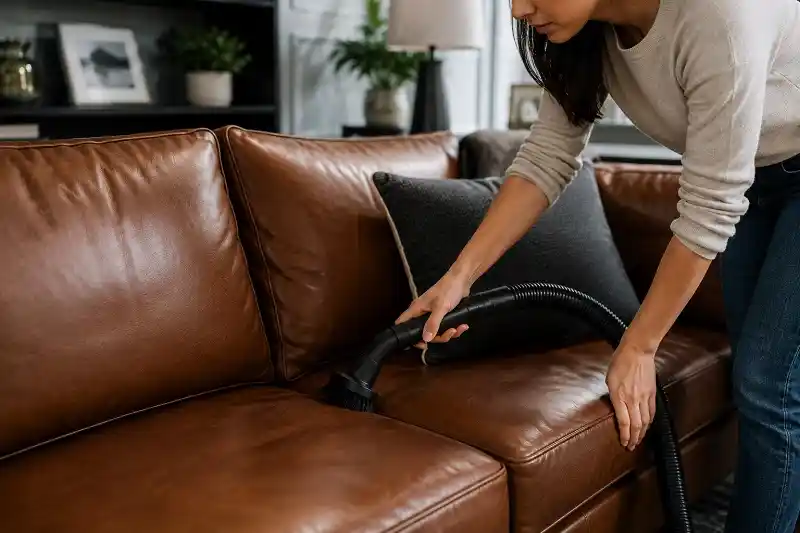
Start by removing loose dirt, crumbs, and dust. Use a vacuum with a soft brush attachment. Run it along the seams, under the cushions, and along the back of the sofa. Be gentle. Do not use attachments with hard plastic edges. They can scratch the leather.
This step matters more than most people think. Cleaning over loose grit grinds it into the leather and causes scratches.
Step 2: Wipe Down with a Damp Cloth and Mild Soap
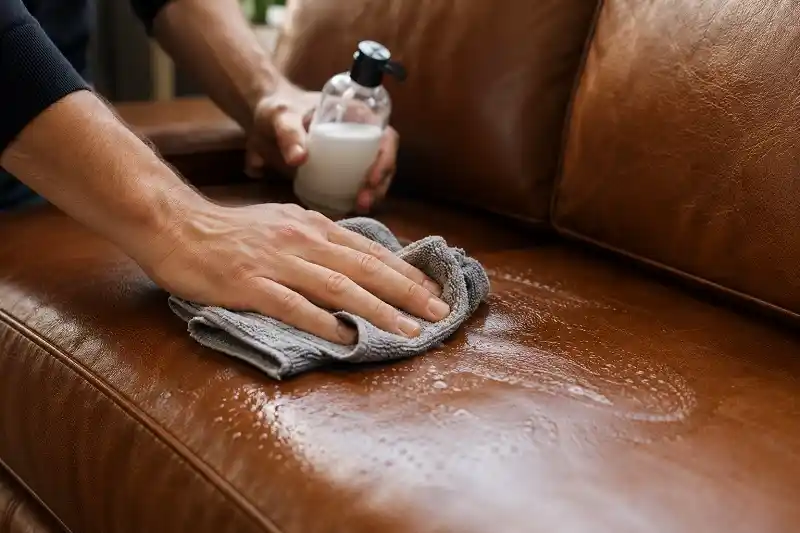
Add a few drops of mild soap to a bowl of lukewarm water. Dip a microfiber cloth into the solution. Wring it out well. The cloth should be barely damp. Not wet.
Wipe the leather surface in gentle, long strokes. Work in small sections. If there is built-up grime, use a little more pressure. But do not scrub. Scrubbing can damage the finish.
Step 3: Remove Soap Residue
Take a second clean cloth dampened with plain distilled water. Wipe over the areas you just cleaned. This removes any soap that is left behind. Soap residue left on leather attracts more dirt over time.
Step 4: Dry the Surface Thoroughly
Use a dry microfiber cloth to blot the surface dry. Do not rub. Do not leave the leather wet. Moisture that sits on the surface can lead to mildew.
Let the furniture air dry for at least one hour before using it. Do not use a hair dryer or heat gun. Heat damages leather fibers and speeds up cracking.
Step 5: Apply a Leather Conditioner
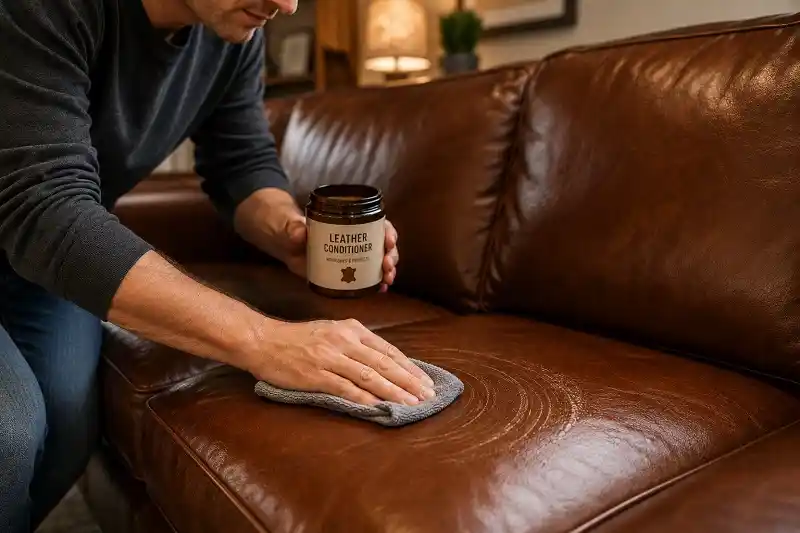
This is the step most people forget. It is also the most important one.
Cleaning removes some of the natural oils from leather. A leather conditioner puts them back. Without conditioning, the leather dries out. It becomes stiff. Eventually it cracks.
Apply a small amount of conditioner to a clean cloth. Rub it into the leather using circular motions. Let it soak in for a few minutes. Wipe away any excess with a dry cloth.
Condition your leather sofa or chair every six to twelve months. If your home is very dry or gets a lot of sunlight, condition more often.
How to Remove Common Stains from Leather Furniture
Different stains need different treatments. Here is how to handle the most common ones.
How to Remove Ink Stains from Leather
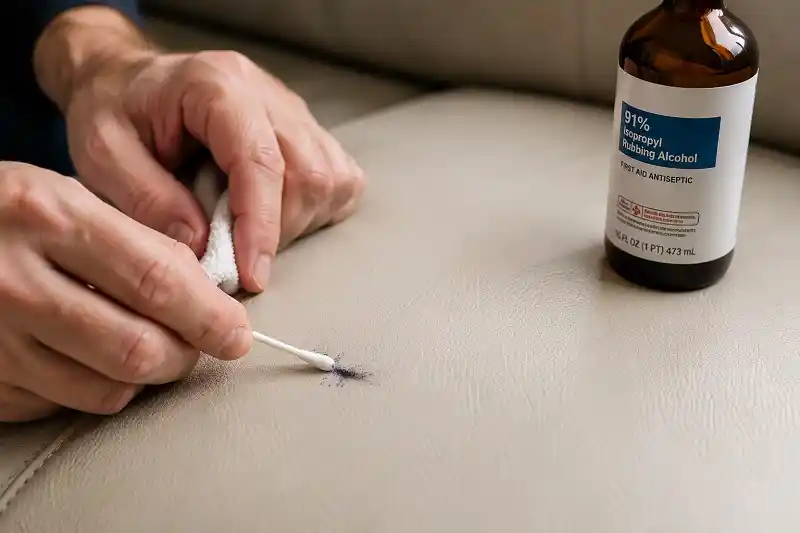
Ink stains look alarming. But they can often be removed if you act fast.
Dip a cotton swab in rubbing alcohol. Gently dab the stain. Work from the outside edge inward. Do not rub outward or you will spread the ink. Blot with a dry cloth and repeat as needed.
Always test alcohol on a hidden spot first. It can affect the color on sensitive leather types. After treatment, apply conditioner to the area.
How to Remove Grease and Oil Stains
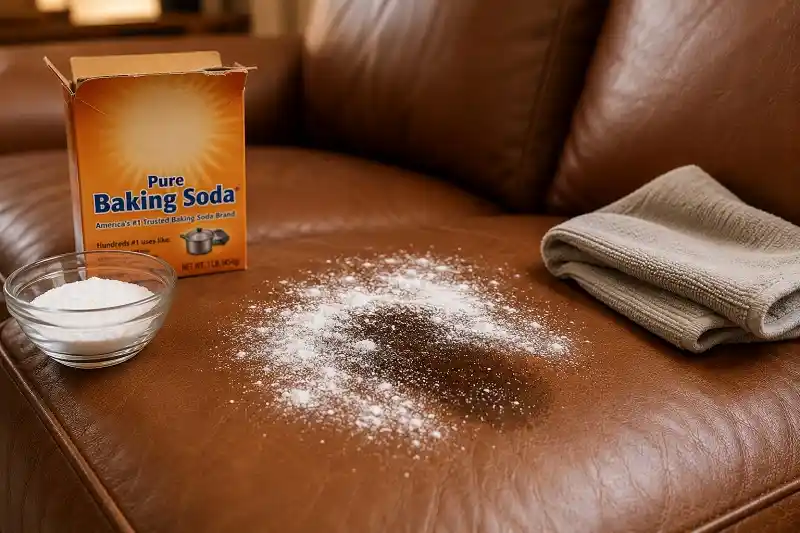
Do not add water to a grease stain. Water spreads oil further into the leather.
Blot away as much oil as you can with a dry cloth. Then sprinkle baking soda or cornstarch directly onto the stain. These powders draw the oil out of the leather. Leave them on for two to four hours. Then brush away gently with a soft cloth.
Repeat if needed. After the stain is gone, clean the area with your mild soap solution and condition.
How to Get Wine Stains Out of a Leather Sofa
For a fresh wine spill, blot immediately with a clean dry cloth. Do not rub. Just blot.
After blotting up as much as possible, clean the spot with your mild soap solution. Dry and condition.
For a dried wine stain, mix equal parts white vinegar and warm water. Dampen a cloth with the solution. Gently blot the stain. Rinse with a plain damp cloth and dry well. Wine stains that have fully dried may need professional treatment.
How to Remove Food Stains from Leather
Use the edge of a soft plastic card to scrape off any solid food. Be gentle. Do not use anything sharp.
If the food is greasy, use the baking soda method first. Then clean with the mild soap solution. Dry the area and condition.
For liquid food stains like sauce or juice, blot immediately and clean with the soap solution.
How to Remove Pet Urine from a Leather Sofa
Pet urine is acidic. It breaks down leather quickly if not treated fast.
Blot up as much liquid as you can right away. Then clean the area with a solution of equal parts white vinegar and water. This neutralizes the acid. Wipe clean with a damp cloth and dry well.
For older stains, use an enzymatic cleaner made for pet accidents. Follow the instructions. Do not soak the leather. Condition the area well after cleaning because pet urine and cleaners both dry out leather.
How to Remove Denim Color Transfer from Leather
This is very common with light-colored leather sofas. Dark jeans leave blue dye on the surface over time.
For fresh dye transfer, wipe gently with a cloth barely dampened with rubbing alcohol. Work carefully and test in a hidden spot first.
For older stains, a leather degreasing cleaner sometimes works. Severe cases may need a professional leather restoration service.
Prevention is easier than removal. Use a leather protector spray on light-colored furniture. You can also place a throw blanket where you usually sit in jeans.
How to Remove Mold from Leather Furniture
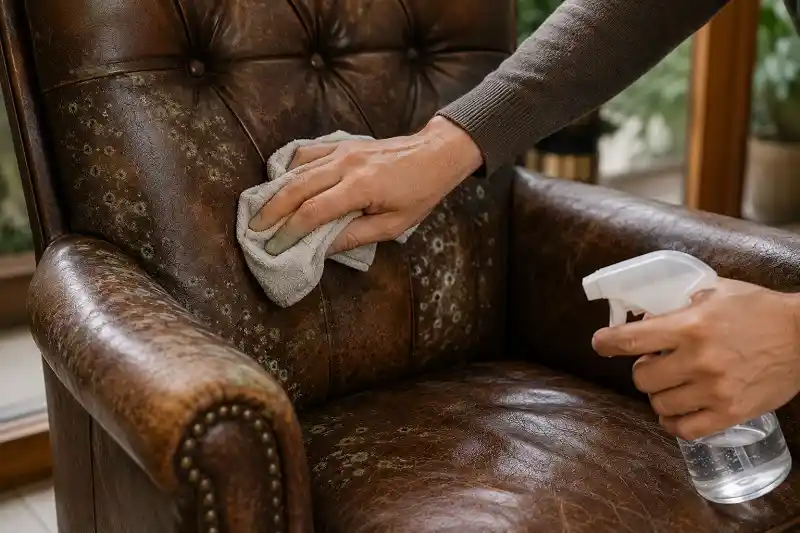
Mold grows on leather when it stays damp or sits in a poorly ventilated space. It usually appears as green, gray, or white fuzzy patches.
Take the furniture to a well-ventilated area if possible. Mix equal parts rubbing alcohol and water. Lightly spray the moldy area and wipe gently with a clean cloth. White vinegar diluted with water works too.
Let the leather dry fully in fresh air. Then apply conditioner. Never use bleach. It destroys the leather surface permanently.
If the mold covers a large area or keeps coming back, call a professional.
Things You Should Never Use on Leather Furniture
Some products seem harmless but cause serious damage. Avoid these at all times.
Bleach and ammonia cleaners strip the natural oils from leather and cause rapid cracking and fading. Baby wipes seem gentle but contain chemicals and fragrances that harm leather over time. All-purpose household sprays are not formulated for leather and can stain or dry out the surface.
Mink oil is sometimes recommended but it is too heavy for furniture leather. It leaves a greasy film, darkens the leather, and attracts dirt.
Steam cleaners are also a bad idea. The heat and moisture cause leather to warp and lose its shape. Two-in-one cleaner and conditioner products rarely work as well as using separate products for each job.
How to Clean Leather Chairs and Smaller Leather Pieces
The same steps apply to leather chairs, ottomans, and headboards. The only difference is scale.
For a leather armchair, use a smaller cloth and work in even smaller sections. Pay extra attention to the armrests. These areas accumulate skin oils, sweat, and dirt faster than anywhere else on the piece.
For leather dining chairs, wipe down after meals rather than waiting for a weekly clean. Food residue left on the surface hardens over time and becomes harder to remove.
For a leather headboard, check the type first. Many headboards use bonded or bicast leather, which requires gentler care. Use the mildly damp cloth method and condition regularly.
How to Restore Old or Cracked Leather Furniture
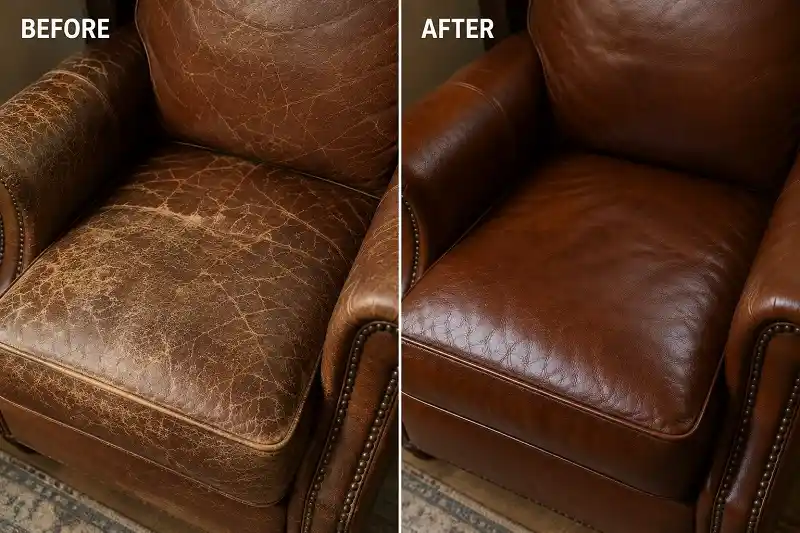
If your leather is already cracked or dried out, you can still improve it. It just takes a bit more work.
Start with a full clean using the gentle method above. Let it dry completely.
Then apply a deep conditioning balm or leather rehydrator. These are richer than regular conditioners. They are designed to penetrate very dry leather fibers. Apply generously and let it soak overnight. Wipe away the excess in the morning.
For surface scratches and light cracks, a leather repair kit with a color-matched filler can help. Apply the filler with a small sponge. Let it dry. Then buff gently with a cloth. These kits work best on pigmented leather.
For deep cracks, large tears, or peeling surfaces, contact a professional leather restoration service. DIY attempts on severe damage often make things worse.
Seasonal Leather Sofa Care Tips
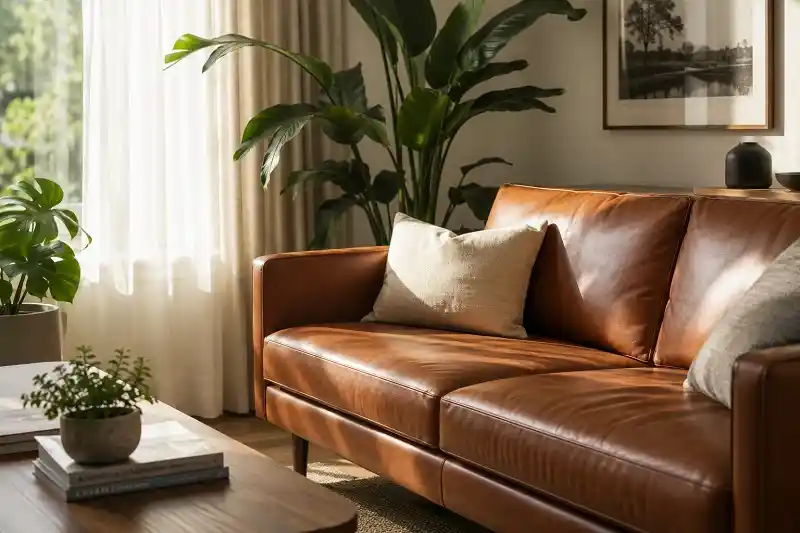
Leather reacts to changes in temperature and humidity. Your cleaning routine should change with the seasons, especially for premium leather sofas and custom-made furniture.
In winter, indoor heating dries the air significantly. This causes leather to lose moisture faster. Condition your furniture every three to four months during the colder months instead of twice a year. A room humidifier placed nearby also helps maintain a stable environment.
In summer, especially in humid climates, the concern shifts to mold. Keep leather furniture in well-ventilated rooms. Wipe the surface with a dry cloth regularly to remove surface moisture. If your home is very humid, use a dehumidifier.
In all seasons, keep leather furniture away from direct sunlight. UV rays fade the color and dry out the surface faster than almost anything else. Use curtains, blinds, or UV-filtering window film if the furniture is near a window.
Helpful Leather Furniture Care Tips at a Glance
Here are some quick habits that make a big difference.
Wipe your leather sofa with a dry cloth once a week. This prevents dust and skin oils from settling into the grain. It takes two minutes. It is worth it.
Address spills immediately. The faster you blot a spill, the less chance it has to soak in and stain.
Rotate and fluff cushions regularly. This prevents one area from wearing faster than the rest.
Keep pets off leather furniture when possible. Claws scratch the surface and pet hair works into the grain. If pets do sit on the leather, apply a leather protector spray to create a barrier.
Keep sharp objects away from the surface. Belt buckles, keys, and zippers all cause scratches that are hard to fix.
Apply a leather protector spray every six months. This adds an invisible layer that repels spills and slows down wear.
Do not dry clean leather furniture at home. Dry cleaning solvents are often too harsh. If you need a deep clean beyond what home methods can handle, go to a certified leather care professional.
When to Call a Professional for Leather Furniture Cleaning
Home cleaning handles most situations well. But some problems need professional attention.
Call a professional if you have deep cuts or large tears. A leather repair specialist can match the color and texture in a way that home kits cannot.
Call a professional if a wine, dye, or ink stain has fully set and home methods have not worked. Professional-grade products and techniques can sometimes remove stains that seem permanent.
Call a professional if mold has spread across a large area or keeps returning. Mold that penetrates below the surface layer cannot be fully removed with surface cleaning alone.
Call a professional if the color has faded badly from sun damage. Leather recoloring is a specialized skill. A trained technician can restore the original look in a way that lasts.
Conclusion
Cleaning leather furniture properly is not complicated. It just requires the right approach and a little consistency.
Know your leather type. Use the right products. Clean gently and regularly. Condition every few months. And act fast when something spills.
A leather sofa or armchair that is well cared for does not just hold up well. It actually looks better with age. The surface develops a natural richness that only comes from years of proper care.
You already have most of what you need at home. A microfiber cloth, a little mild soap, and a quality leather conditioner are enough for most cleaning jobs. Start with those. Build the habit. Your furniture will reward you for it.