
Buying furniture without measuring first is one of the most common and costly mistakes people make. You find the perfect sofa, order it, and then it either does not fit through the front door or leaves almost no room to walk. It is frustrating, and it happens more often than you think.
The good news is that measuring a room for custom furniture is not complicated. You just need to know what to measure, in what order, and what numbers actually matter. This guide walks you through everything step by step so you can shop with confidence and avoid any nasty surprises on delivery day.
What Measurements Do You Need Before Buying Furniture
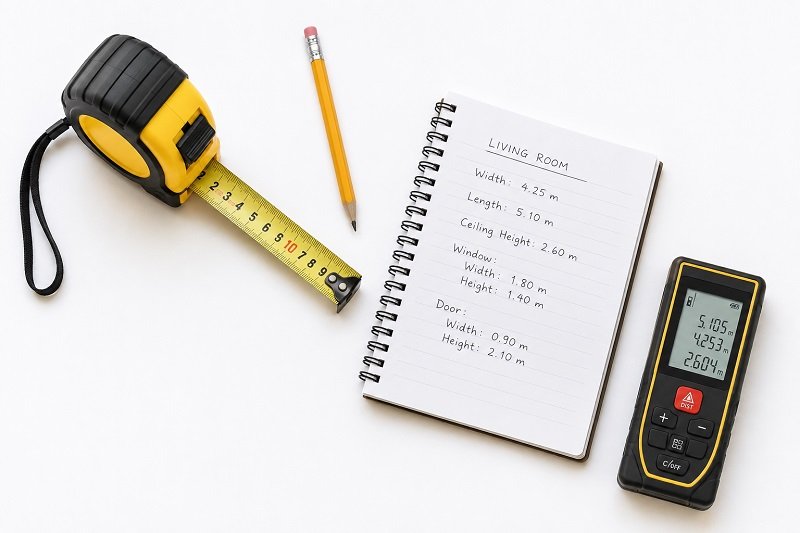
Before you go anywhere near a shop or website, you need three types of measurements:
- Room dimensions — the length, width, and ceiling height of the space
- Fixed features — where doors, windows, radiators, and plug sockets are located
- Delivery path — the route the furniture will travel from the street to the room
Each of these plays a role in whether a piece of furniture actually works in your home. Missing even one can cause problems.
Tools You Need To Measure A Room
You do not need anything fancy. Here is what works best:
- Tape measure — a retractable one at least 5 metres long
- Pencil and notebook — to write down measurements as you go
- Graph paper or a free floor plan app — to sketch the room layout
- Laser measure (optional) — faster and more accurate for larger rooms
A standard tape measure does the job perfectly for most homes. Just make sure you note down every measurement right away. Do not rely on memory.
How To Measure Room For Furniture Step-By-Step Guide
Measure Room Length And Width
Start with the two longest walls. Measure from one wall to the opposite wall at floor level. Write down both numbers.
Do this in at least two places along each wall. Some rooms are not perfectly square, and even a small difference can affect how furniture fits. Use the smaller measurement to be safe.
Measure Ceiling Height
This matters more than most people realise. Tall wardrobes, bunk beds, and large shelving units need enough vertical space. Measure from the floor straight up to the ceiling in a few spots, as ceiling heights can vary slightly in older homes.
Also note any ceiling features like beams, coving, or light fittings that might reduce usable height.
Mark Doors, Windows, And Fixed Items
On your sketch, mark exactly where every door and window sits. Note:
- Which way does each door swing open
- The width of each door frame
- The height and width of every window
- Any alcoves or chimney breasts
These features limit where furniture can go and how it can be arranged.
Check Sockets, Switches, And Radiators
This step gets overlooked a lot. A radiator blocked by a sofa will make the whole room feel cold and damp. A socket hidden behind a wardrobe becomes useless.
Walk around the room and mark the position of every plug socket, light switch, and radiator. This shapes where larger pieces of furniture can realistically go.
Draw A Simple Floor Plan
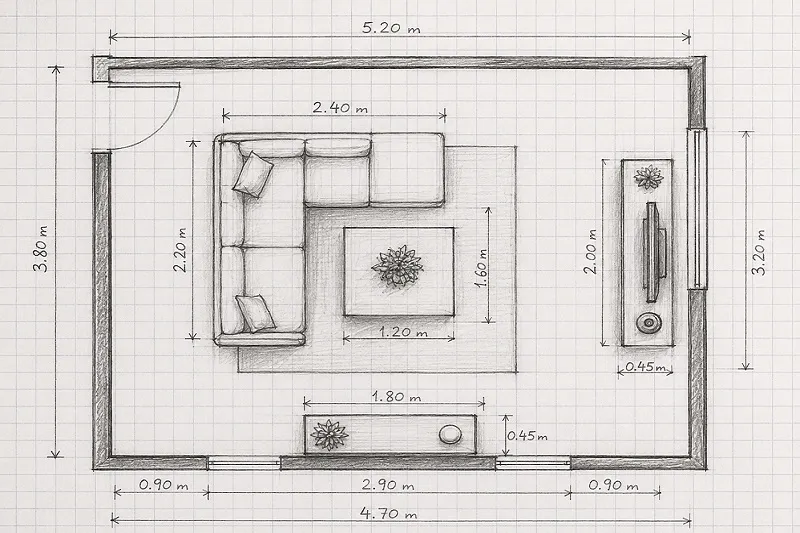
You do not need to be an artist. A rough sketch on graph paper works well. Use a scale like 1 square equals 10 centimetres so you can see how furniture will sit in the space.
There are also free apps like RoomSketcher or Planner 5D that let you drag and drop furniture into a digital version of your room. These are great if you want to experiment before committing.
Measure The Delivery Path Before Buying
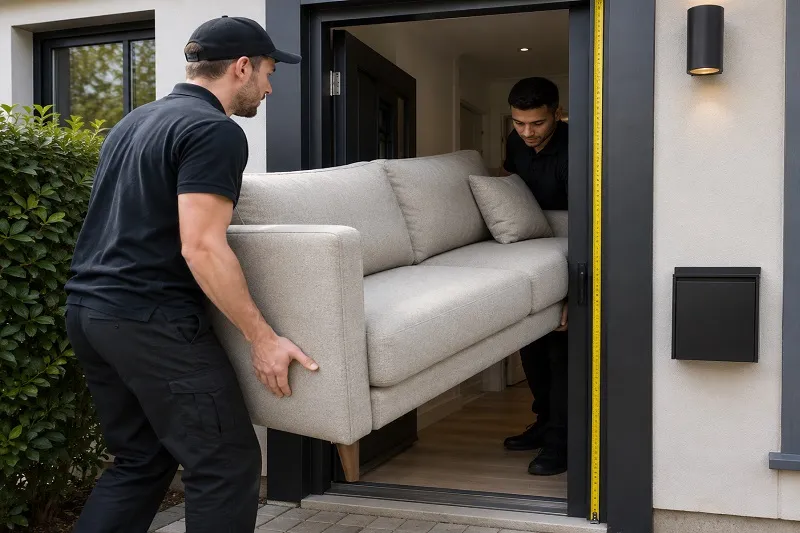
This is the step most people completely forget. The furniture has to be moved from the delivery van into the room. If it cannot fit through the route, it cannot go in the room.
Front Door And Main Entrance
Measure the width and height of your front door frame, not just the door itself. The frame is what matters for moving furniture through. Note whether there are any steps, raised thresholds, or tight porches to navigate.
Hallways And Tight Corners
Measure the width of your hallway. Also, measure any corners or turns the delivery team will need to make. A long sofa might clear the front door, but then get stuck turning into the living room. The key number here is the diagonal measurement of the furniture piece compared to the height of the corridor when tilting it around a corner.
Staircases And Landings
If the furniture is going upstairs, measure:
- The width of the staircase
- The height of the ceiling above the stairs
- The size of the landing at the top
- Any turns or awkward angles mid-staircase
A good rule is that large items like mattresses and wardrobes almost always need to be stood upright or disassembled to go up stairs.
Lifts And Apartment Access
If you live in a flat, check whether your lift can take the furniture. Measure the lift door width, the internal width, depth, and height. Also note any fire doors or lobby areas with narrow openings.
How Much Space Should You Leave Around Furniture
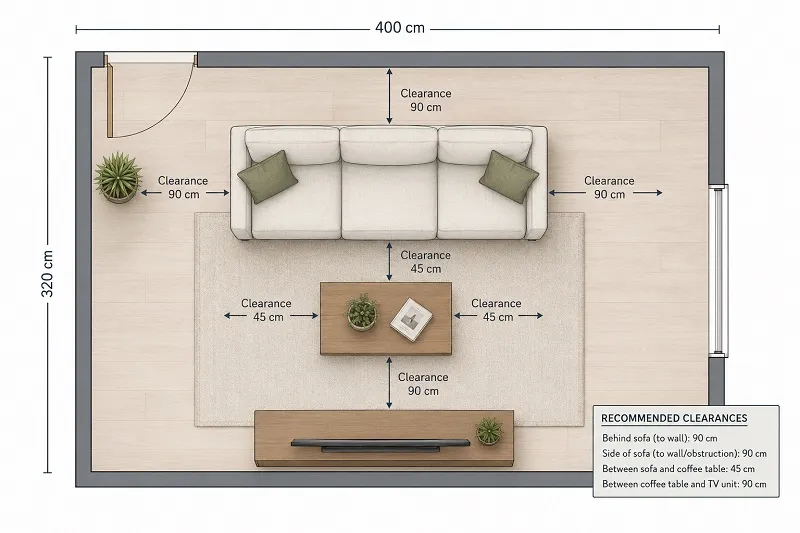
Having furniture that fits in a room is only half the job. You also need enough space to move around it comfortably.
Sofa Clearance
Leave at least 45 to 50 centimetres between the front of your sofa and a coffee table. You should be able to walk past easily without squeezing. Leave at least 90 centimetres between a sofa and a TV wall for comfortable viewing.
Coffee Table Clearance
A coffee table needs around 40 centimetres of clearance on all sides. Less than that, and the room starts to feel cramped and awkward to move around in.
Dining Table Clearance
Allow at least 90 centimetres between the edge of a dining table and the nearest wall or furniture. This gives you enough room to pull out a chair and sit down without bumping into anything. Ideally, aim for 100 to 110 centimetres for a more relaxed feel.
Bed Clearance
You need at least 60 centimetres on either side of a double or king bed so you can get in and out easily. One side can be closer to the wall if needed, but try to keep at least 70 centimetres on the main side.
At the foot of the bed, leave 90 centimetres minimum so you can open wardrobe doors or move around freely.
Wardrobe Door Clearance
A hinged wardrobe door needs enough clear floor space in front of it to open fully. That usually means around 60 to 70 centimetres of free space. Sliding doors need no clearance, but they only ever reveal half the wardrobe at a time.
Room By Room Measuring Guide
Living Room
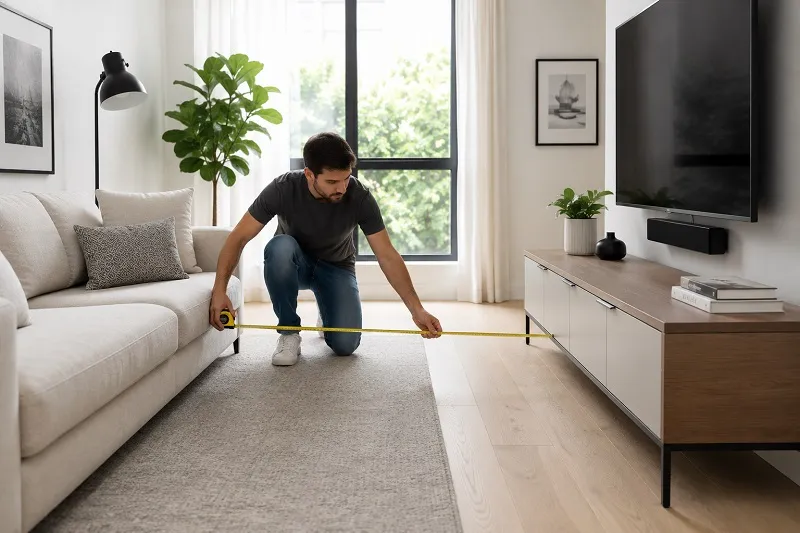
Measure the full length and width of the room. Note the TV wall, the main window, and the door position. Then decide on a furniture layout before measuring individual pieces. Think about sofa orientation, viewing distance from the TV, and where natural light falls.
Key measurements to take:
- Distance from TV wall to seating area
- The width available for the sofa
- Space for coffee table and side tables
Bedroom
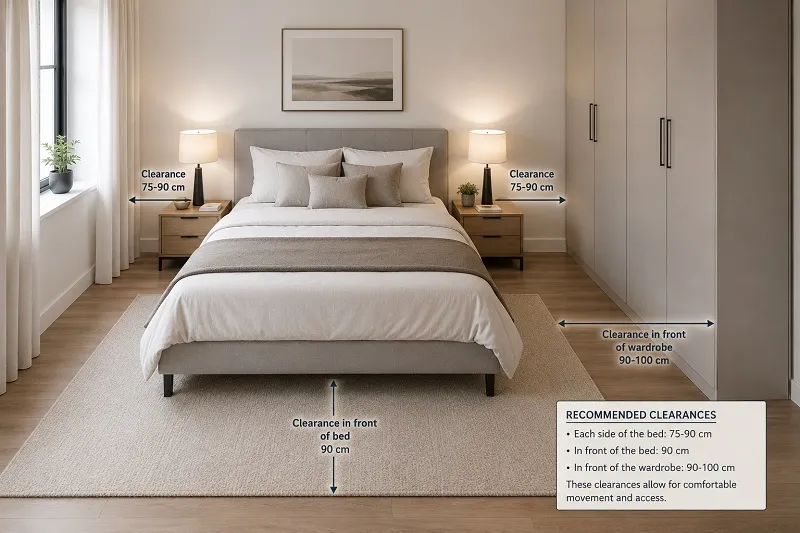
The bed is the anchor piece in any bedroom, so start there. Measure the room and work out whether a single, double, king, or super king will fit with proper clearance on all sides. Then plan for wardrobes, bedside tables, and dressers around it.
Key measurements:
- Room width and length
- Wall space available for wardrobes
- Distance between the bed and the window or door
Dining Room
For a dining room, the table size depends heavily on how much clearance you can afford on all sides. Measure the room and subtract at least 90 centimetres from each side to find your maximum table footprint. This leaves enough room for chairs to be pulled out and people to walk behind seated guests.
Home Office
In a home office, the desk and chair take priority. Make sure you have enough depth for the desk (at least 60 centimetres), plus space behind the chair for you to push back comfortably (around 90 centimetres minimum). Also, check whether shelving or filing cabinets will block any natural light.
Hallway
Hallways are the trickiest spaces to furnish because they are often narrow. Measure the width carefully. If it is under 90 centimetres wide, keep furniture minimal. A slim console table should be no more than 30 to 35 centimetres deep to leave a clear walkway.
Small Apartment
In a small apartment, every centimetre counts. Measure every wall, alcove, and nook. Look for opportunities to use built-in storage or furniture that serves more than one purpose, like a sofa bed or a dining table that folds against the wall. Draw a floor plan and try different layouts on paper before buying anything.
How To Measure Different Furniture Pieces
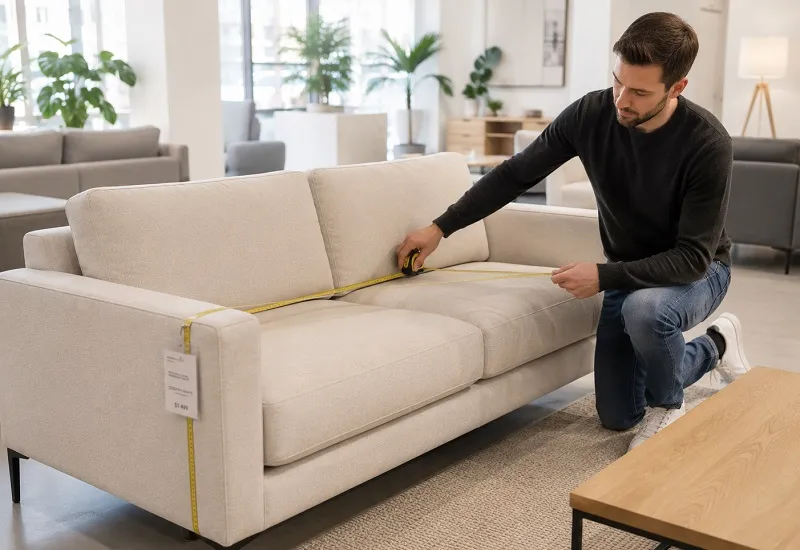
Sofa And Sectional
For a custom made sofa, you need the overall width, depth, and height. For a sectional, also measure each section separately and note the corner placement. Check the diagonal measurement too, as this tells you how the piece can be angled through a doorway.
Bed And Headboard
Measure the bed frame width, length, and height. If there is a headboard, measure its height separately. Some headboards are much taller than the mattress area and can affect ceiling clearance or window placement.
Dining Table
Measure the full table length and width. If it has extension leaves, measure the extended length as well. Also note the table height and whether it will work with the chairs you already have or plan to buy.
Wardrobe
Wardrobes need three measurements: width, depth, and height. Standard wardrobe depth is around 58 to 60 centimetres. Check whether ceiling coving or light fittings will interfere with the full height version you want.
Coffee Table
Measure width, depth, and height. The height should sit roughly level with or slightly below your sofa seat height. Too tall, and it is uncomfortable to use. Too short and it can look out of proportion.
Recliner
A recliner needs extra space behind it when fully reclined. Some models need as little as 5 centimetres from a wall, while others need 40 centimetres or more. Always check the recline depth in the product specifications and measure that space in your room before ordering.
TV Unit
Measure the width of the wall or alcove where the TV unit will go. Also note the height, as some TV units are designed to be low and minimalist, while others are tall media towers. Make sure your TV will sit or mount comfortably above it without being too high for comfortable viewing.
Common Measuring Mistakes To Avoid
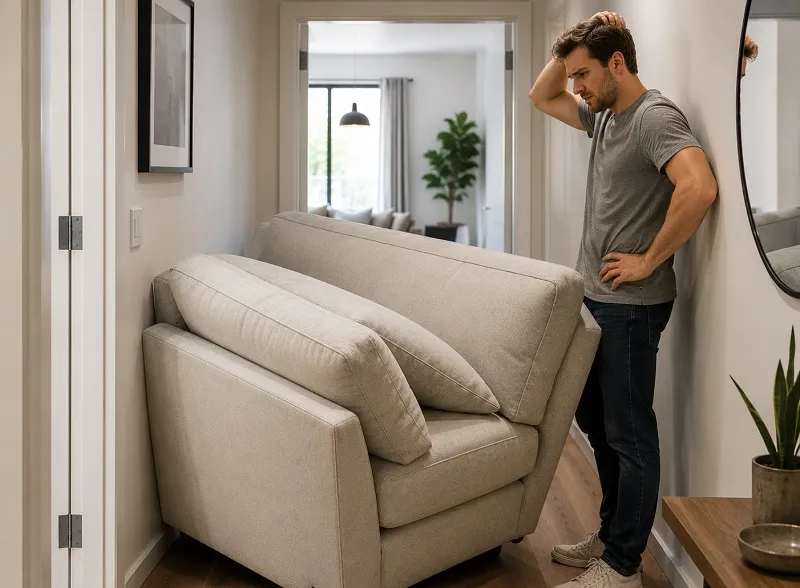
These are the mistakes that catch people out most often:
- Measuring only once — always measure twice and write it down both times
- Forgetting the delivery path — the room measurement means nothing if the furniture cannot get in
- Ignoring door swing — a door that opens into the room can block furniture or create a dead zone
- Not accounting for skirting boards — skirting boards add a few centimetres to the wall, and some furniture does not sit flush against the wall because of them
- Assuming furniture dimensions online are exact — always read the full spec sheet, as some listings show the frame size without customized cushions or legs
- Forgetting clearance space — a room can hold the furniture, but still feels impossible to live in without breathing room
- Buying before measuring the delivery route — this is the most expensive mistake of all
Quick Furniture Measuring Checklist
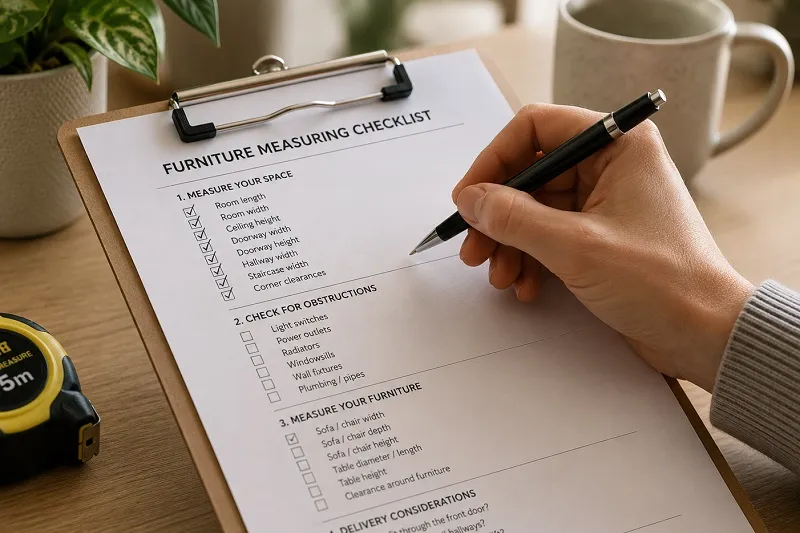
Use this before you buy anything:
Room:
- Room length and width measured
- Ceiling height noted
- Doors marked (width and swing direction)
- Windows marked (width and height)
- Radiators, sockets, and switches noted
- Floor plan sketched
Delivery Path:
- Front door width and height measured
- Hallway width noted
- Any corners or turns measured
- Staircase width and ceiling height checked (if applicable)
- Lift dimensions checked (if applicable)
Furniture:
- Full dimensions of the piece noted (width, depth, height)
- Clearance space around the piece is planned
- Checked that the piece clears the delivery path
Final Thoughts
Measuring a room for furniture is not a big job. It takes maybe 20 to 30 minutes, and it saves you a huge amount of stress, money, and frustration down the line. The key is to measure the room, measure the delivery path, and measure the furniture itself before you commit to anything.
Sketch out your floor plan, check your clearances, and shop knowing exactly what will fit. You will make better choices, spend money more wisely, and end up with a home that actually works for you.
If you are unsure, always go slightly smaller. It is much easier to add to a room than to return a sofa that will not fit through the door.
FAQs
How Do You Measure A Room For Furniture?
Start by measuring the length and width of the room from wall to wall. Note the ceiling height, door positions, window locations, and any fixed features like radiators. Sketch a simple floor plan and use it to plan where furniture will go. Always measure the delivery route as well.
How Much Space Should Be Left Around Furniture?
As a general guide, leave at least 90 centimetres around a dining table, 45 to 50 centimetres between a sofa and coffee table, 60 centimetres on each side of a bed, and 40 centimetres around a coffee table. These gaps make the room feel open and easy to move around in.
How Do I Know If Furniture Will Fit Through The Door?
Measure the door frame width and height, not just the door itself. Then check the furniture width and height. For longer pieces, you may need to tilt them diagonally. Calculate the diagonal measurement of the furniture and compare it to the height of the door frame to see if tilting will work.
Should I Measure Before Buying Furniture?
Yes, always. Even if a piece looks like it should fit, room proportions can be deceiving. Measuring first means you shop with exact numbers, which makes it much easier to compare products and avoid costly returns or delivery problems.
How Do You Measure A Small Room For Furniture?
In a small room, measure every wall, corner, and alcove carefully. Draw a scaled floor plan and test different layouts on paper before buying. Focus on clearance space first, then choose furniture that fits the available gaps. Multi-purpose furniture works particularly well in smaller spaces.